
PARIS — Mobilizations in France continue after nearly eight weeks of protests, with new street actions over the weekend, blockades of schools and universities, and clashes with security forces. Faced with the persistence of the demonstrations and the scheduling of a general strike for this Tuesday (17), the government published on Sunday a decree prohibiting the sale and use of various categories of fireworks across the national territory.
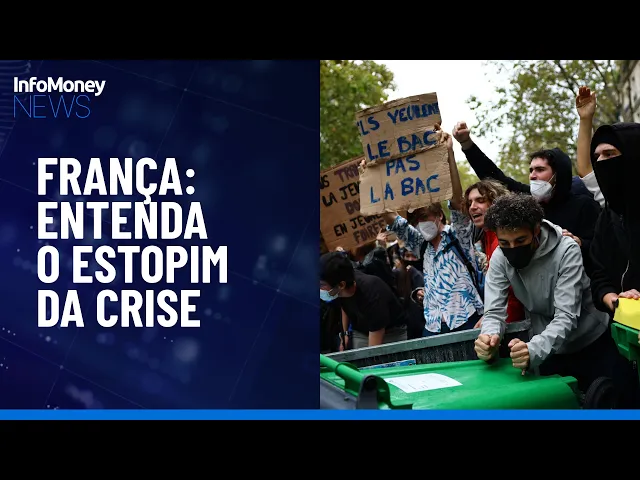
On Saturday, for the fifth consecutive weekend, protesters returned to the streets in different French cities. The Interior Ministry counted 106,000 participants, 24,000 in Paris. The estimate from student organizations was higher: 200,000 people nationwide.
Despite the reduction compared to the demonstrations of the previous week, when the government recorded 146,000 participants, the mobilization continues to bring together students, unions, members of the Yellow Vests, and groups opposed to police violence and to the rising cost of living.
The protests featured episodes of violence in various cities. In Lyon, members of a BFMTV crew were assaulted while covering the demonstration.
In Paris, police used tear gas during the dispersal of the rally. Conflicts were also recorded in other locations.
The new wave of demonstrations comes as the closures of educational establishments continue, remaining among the main flashpoints of the crisis.
Read more:
Governo proíbe venda e uso de fogos de artifício
Signed by Prime Minister Sébastien Lecornu, a government decree published on Sunday night established the nationwide ban on the sale and use of certain pyrotechnic devices until November 27.
The restriction covers products such as rockets, firework batteries, petards, Roman candles, and combinations of pyrotechnic devices, as well as mortar fireworks that have been used in clashes with police and near schools.
The prohibition applies to both sales and use across the entire French territory and took effect immediately upon publication. There are exceptions for professionals who possess the required qualifications and authorizations and for public bodies.
According to the Ministry of the Interior, the aim is to prevent these materials from being used to cause disturbances during the blockades of high schools and universities and during demonstrations.
The use of mortar fireworks against police and school staff has been one of the main concerns of authorities in recent weeks.
Bloqueios continuam
The situation in schools remains irregular. Some establishments have resumed activities, others continue facing blockades, and units had to shift to remote learning for safety reasons.
On Monday (16), the Nelson-Mandela high school in Nantes partially reopened, about a month and a half after it was struck by a fire during the protests. The resumption of activities, accompanied by the Minister of Education, Édouard Geffray, was marked by new student protests criticizing the government’s presence at the school.
The current dimension of the mobilization in schools is difficult to gauge. In a report published on Friday (13), Le Monde reported that the government counted 200 high schools affected by blockades, blockade attempts, episodes of violence, or fires in the previous 15 days. Of these, 80 faced recurring blockades and 50 had almost systematic interruptions. More than 100 establishments had been shifted to distance learning for safety reasons during one of the mobilization days in November.
Nova greve nacional na terça-feira
The mobilization is also expected to continue this week. Unions of public-sector workers, railway workers, teachers, and student organizations have called for a new day of strikes and demonstrations on Tuesday (17).
The call gained momentum after the government postponed to December 11 negotiations on the purchasing power of public employees. The CFDT, one of the main French trade unions, joined the mobilization, which also involves student organizations and high school students.
The Yellow Vests announced participation in the actions and have already called for a new demonstration on Saturday (21), marking eight years since the movement began.
