
Three years ago, on October 7, 2023, Hamas fighters backed by Iran led the attack considered the deadliest ever carried out against Israel. After firing rockets at the southern part of the country, they crossed the border from the Gaza Strip, killing more than 1,300 people, injuring another 3,300 and taking hundreds hostage. The Israeli retaliation that followed is regarded by experts as the most significant geopolitical event in the Israeli-Palestinian conflict in several decades.
The consequences and humanitarian impacts of the war are renewed every month. The latest tally reported that 74,000 Palestinians were killed in Gaza, virtually destroyed by bombardments and clashes between Israeli troops and Hamas militias.
The Palestinian Central Bureau of Statistics (PCBS) estimates that approximately 82% of all buildings in the Gaza Strip were completely or partially destroyed in these three years.
On the Israeli side, there were significant economic impacts: with the war effort, the country was forced to increase its debt, rising from 60% before 2023 to more than 70% of GDP. At the same time, Israel’s defense budget tripled, rising from 4% of GDP to more than 12%.
Gross Domestic Product (GDP) suffered a setback from 2024, with growth dropping from about 5% to around 2%. But the economy began to recover more strongly in 2025 – IMF’s projection for this year is already at 3.5%.
An important fact is that more than 150,000 Palestinians from Gaza and the West Bank worked in Israel – especially in the tourism and agriculture sectors. As most were barred from entering the country, today fewer than 30,000 Palestinians continue working in Israel.
The trauma of the 2023 attacks and the conflicts against Hamas, Hezbollah, and Iran in the last three years is also taking a heavy toll on Israeli society. The Times of Israel reported that nearly a million people called the Emotional First Aid (ERAN) mental health helpline seeking help during the period.
According to a report from the non-profit emotional first aid service, 774,604 telephone calls were answered and 154,307 digital contacts via WhatsApp, chat, SMS and email were made by teenagers and young adults, involving thoughts, intentions or actions of suicide.
Below is a brief timeline, compiled from data from the Council on Foreign Relations (CFR):
October 2023 (attacks and retaliation)
The Hamas, supported by other Palestinian armed groups, launches an unprecedented surprise attack against Israel, killing approximately 1,200 people, most of them civilians. Militants also take 251 hostages. It is the deadliest attack in Israel’s history, which immediately responds by launching airstrikes in Gaza. Then, on October 27, the Israel Defense Forces launch a ground offensive called Operation Iron Swords to destroy Hamas in Gaza. Tens of thousands of Palestinians — civilians and fighters — were killed in these three wars, while Israel lost about a thousand soldiers in Gaza.
November 2023 – 1st ceasefire
Israel and Hamas agree to a temporary ceasefire mediated by the United States, Egypt and Qatar. The truce lasts initially four days and then is extended to about a week. Under its terms, Hamas frees 105 hostages, mainly women and children, while Israel releases about 240 Palestinian prisoners in exchange. Both sides also allow an increase in humanitarian aid to Gaza. Fighting resumes on December 1, with more than a hundred hostages still held in Gaza.
September/November 2024 – Israel x Hezbollah
Almost a year after the October 7 attacks, tensions rise between Israel and the Lebanese militant group Hezbollah, which supports Hamas in Gaza and acts as Iran’s most important allied group in the region. Hezbollah had already been exchanging air strikes with Israel since October 8, 2023, but the conflict intensifies in September after Israel launches a coordinated attack against Hezbollah operatives using explosive pager devices. In the weeks that followed, Israel conducts airstrikes that kill the group’s longtime leader, Hassan Nasrallah, along with other senior Hezbollah members. In October, Israeli forces organize a ground invasion in southern Lebanon to dismantle the group. In support of Hezbollah, Iran launches more than 150 ballistic missiles at Israel, prompting Israel to retaliate. These were the direct hostilities between the two countries. Israel and Hezbollah agree to a ceasefire at the end of November, but the conflict returns definitively in 2026
January/March 2025
The Israeli government and Hamas agree to another ceasefire, which comes into effect in January 2025. Under its terms, Hamas again agrees to release additional hostages, while Israel frees Palestinian prisoners in exchange. Israel also agrees to allow humanitarian aid to address the severe social situation of Gaza residents. Although the ceasefire initially pointed to an end of the war, within a few months both sides began accusing each other of violating the agreement’s terms. In March, Israel launches new airstrikes and blocks aid and energy entering Gaza – by May, large-scale ground operations resume.
October 2025
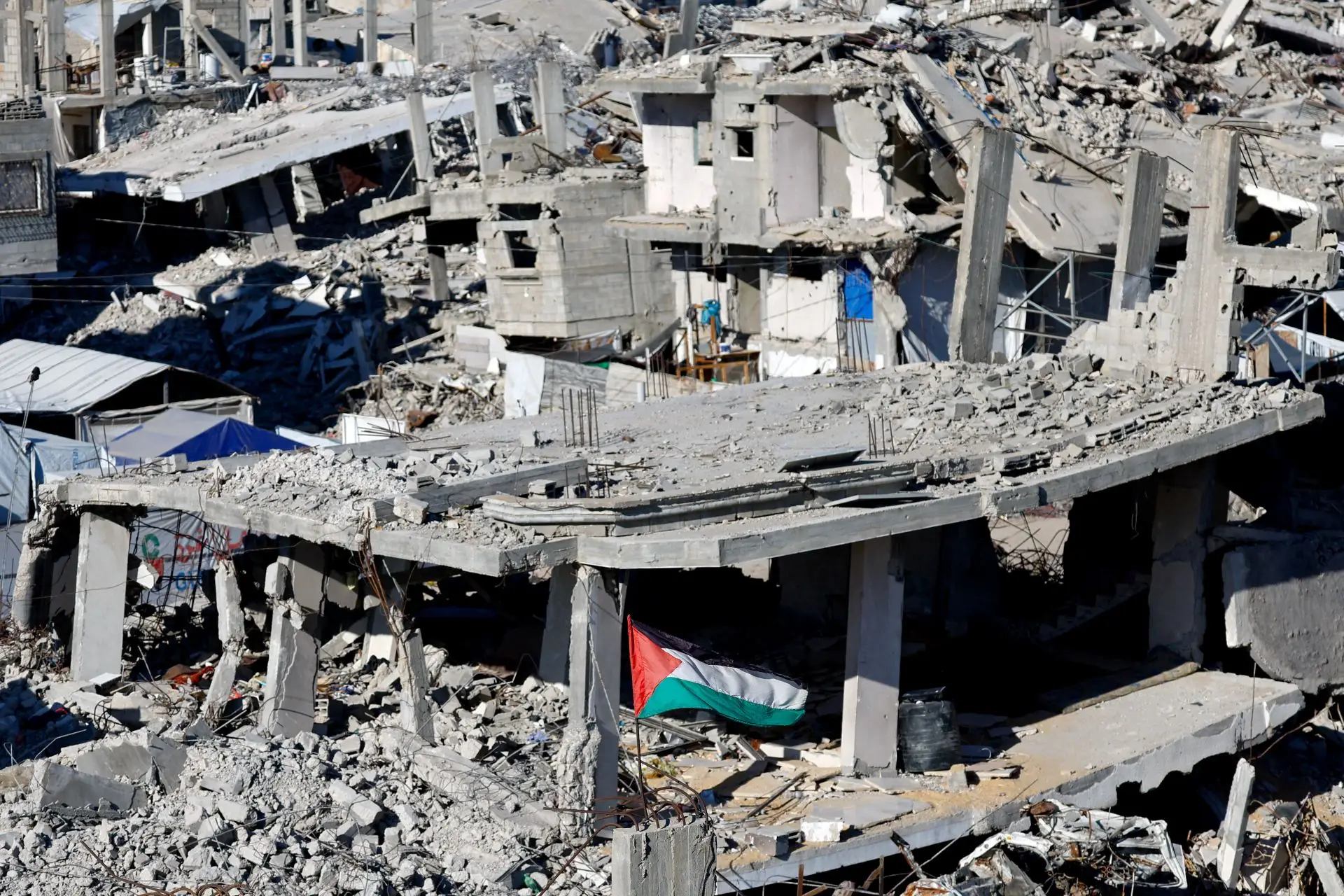
By the end of September 2025, the Trump administration reveals a twenty-point plan to end the war. Two weeks later, Israel and Hamas agree to its first phase, which foresees an end to hostilities, partial withdrawal of Israeli forces, and a significant increase in humanitarian aid to Gaza. It also states that Hamas will free and return all hostages in exchange for Israel releasing 250 Palestinian prisoners serving life sentences, 1,700 other Gaza detainees, and the bodies of 15 Palestinians for every hostage death received.
The second phase of the agreement requires Hamas to demobilize and agree to a transitional government in Gaza, as well as an international stabilization force to maintain security. To support the agreement, the Trump administration also demands an International Peace Council, consisting of officials from more than sixty invited countries and chaired by Trump.
The Trump administration announces the start of the second phase in January 2026, after the recovery of the remains of the last hostage. Implementation progresses slowly, however; months after the announcement, Hamas has not disarmed, a transitional government and a stabilization force have not materialized, and less than half of the invited countries agreed to join the Peace Council. Meanwhile, both Israel and Hamas continue to report regular violations of the ceasefire. Despite these periodic flare-ups, the ceasefire has largely held.
