
On the 18th day of the war in the Middle East, Israel launched extensive strikes against Tehran on Tuesday (the 17th), the capital of Iran. The bombings killed Ali Larijani, Iran’s head of National Security, and Gholamreza Soleimani, head of the Basij militia. The deaths were confirmed by the Iranian government.
In addition, Israel continues concentrating attacks in Lebanon, where it says it is fighting the Islamist extremist group Hezbollah.
The UN High Commissioner for Human Rights spokesman, Thameen Al Kheetan, said on Tuesday that the Israeli attacks on civilian infrastructure and residential buildings in Lebanon could be considered war crimes and raise serious concerns from the point of view of international humanitarian law.
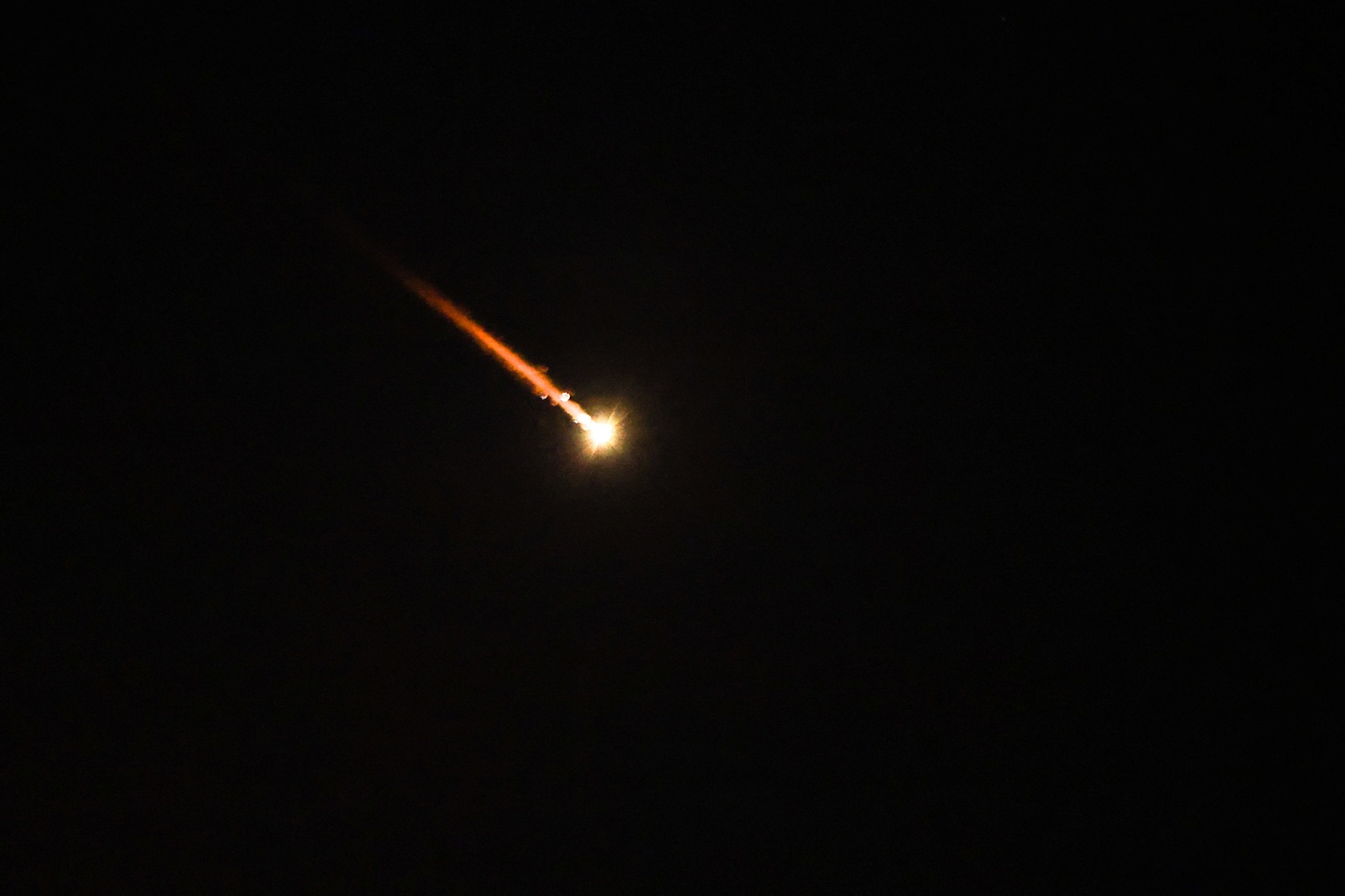
In turn, Iran maintains bombardments of other countries in the region that could be seen as allies of the US or Israel. Qatar, Kuwait and the United Arab Emirates said they had intercepted Iranian missiles on Tuesday.
The United Arab Emirates even closed the country’s airspace due to threats of attacks. A new attack on the U.S. Embassy in Baghdad, Iraq, was also reported.
According to the Israeli government, the capital Tel Aviv and the north of the country were targets of Iranian attacks on Tuesday.
Another notable event of the day was the resignation of Joe Kent, the main counterterrorism official in the United States. “I cannot, in good conscience, support the current war in Iran,” Kent wrote in a letter published on X. “Iran did not pose any imminent threat to our country, and it is clear that we started this war due to the pressure from Israel and its powerful lobby in the United States.”
War Numbers
- 912 people were killed in Lebanon, including 111 children, according to the country’s Health Ministry;
- Another 2,221 were injured in Israeli attacks on Lebanese territory;
- 200 Ukrainian drone specialists are operating in the Middle East, according to President Volodymyr Zelenskiy;
- The war in the Middle East could push 45 million people into acute hunger, according to an analysis by the World Food Programme.
Trump Snubs NATO
Donald Trump’s main remarks on Tuesday referred to NATO (the North Atlantic Treaty Organization), of which the United States is a member. After group allies refused to cooperate to free the Strait of Hormuz, currently blocked by Iran, Trump said he does not need their support.
“I am not surprised by their action, because I have always regarded NATO as a one-way street – we protect them, but they do nothing for us, especially in times of need,” he said.
Repeating what he has been saying, despite evidence to the contrary, Trump stated that the United States “is still not ready to leave Iran,” but will do so in a near future.
The White House’s economic adviser, Kevin Hassett, outlined a positive scenario for the U.S. by saying, in an interview with CNBC, that oil workers are crossing the Strait of Hormuz and that Iran’s actions in the region have not harmed the American economy.
The MarineTraffic monitoring platform reported that 15 ships managed to transit the Strait of Hormuz in the last three days. The site did not detail what traffic is considered normal.
Iran Refuses Deal
An Iranian official told Reuters that the new supreme leader of Iran, Motjaba Khamenei, rejected proposals to reduce tensions or to a ceasefire with the United States, which would have been transmitted to Tehran by two intermediary countries.
The Iranian Foreign Minister, Abbas Araqchi, urged states and institutions concerned with world peace and security to condemn the Israeli and American attacks against his country.
He also told UN Secretary-General Antonio Guterres that disruptions in the Strait of Hormuz cannot be treated separately from the war waged by the United States and Israel against Iran.
The country also backed away from the idea of abandoning the FIFA World Cup, which takes place in June and July, with the United States as one of the host nations. Tehran, however, asked FIFA that the games of the Iranian national team be played in Mexico, another host country.
