
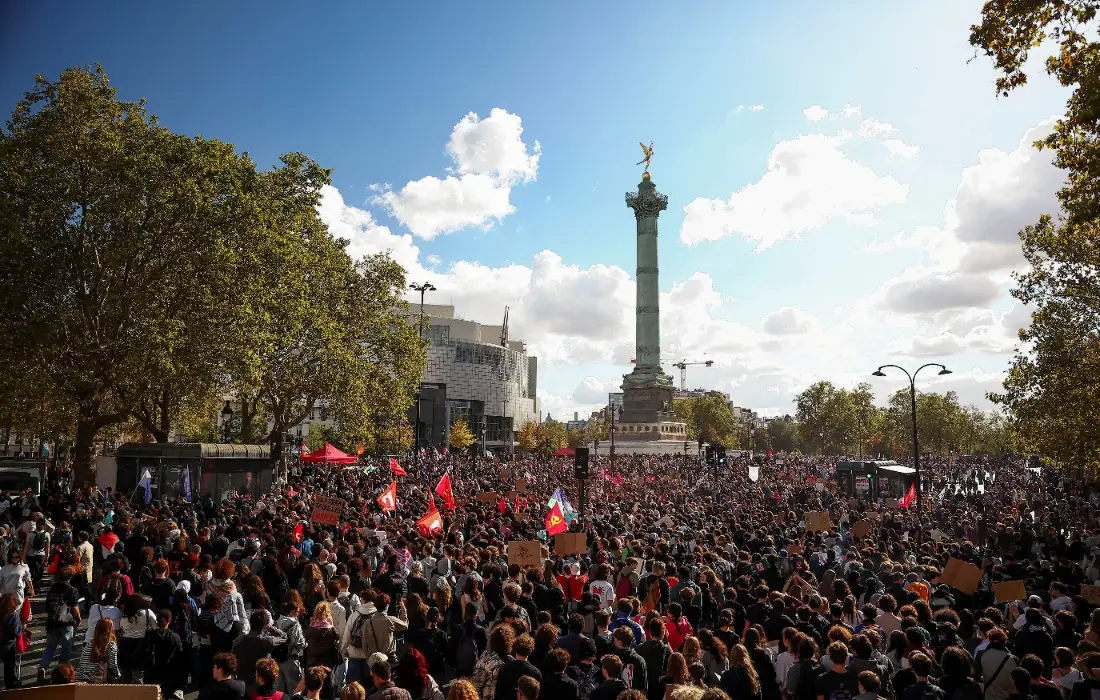
PARIS — The protests that have mobilized students in France since September have gained a broader dimension by incorporating criticisms of police violence, the cost of living, and public services.
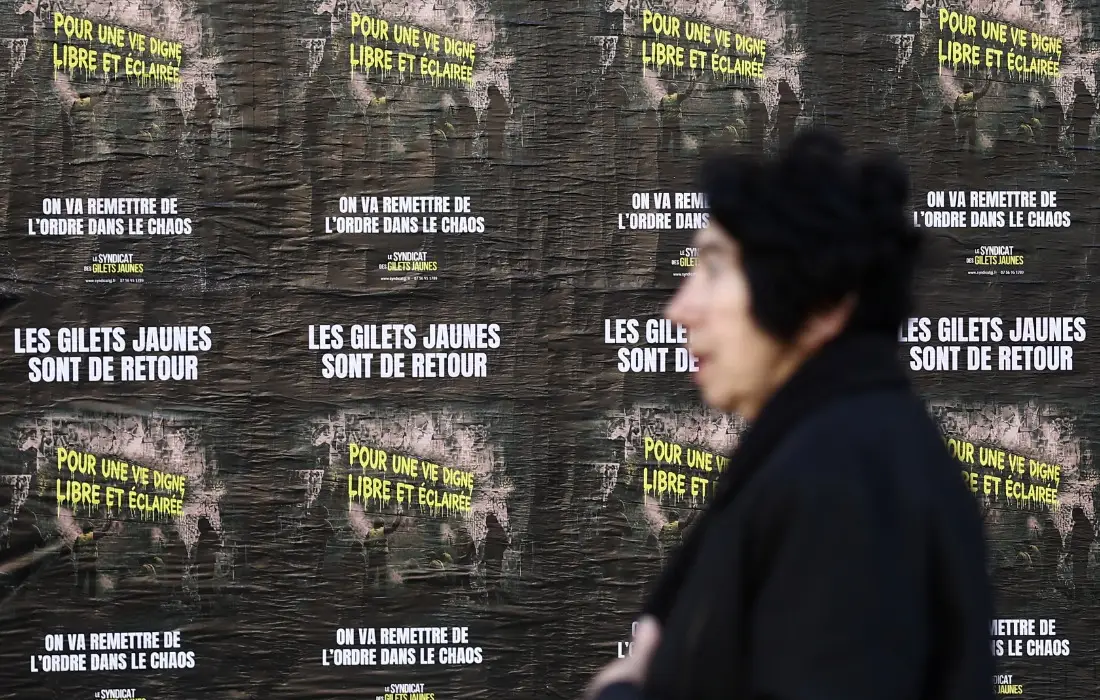
The mobilization began with demands about teaching conditions, then began to attract university students, unions and, now, may have managed to resurface the former Yellow Vests members, a movement that drew thousands to the streets of the country in 2018 and 2019.
The rapprochement is at the center of the call for this Saturday (17), when demonstrations are planned in several French regions. The coordination gained strength on social networks, but there are still doubts about the ability to transform digital mobilization into effective street participation and about the degree of coordination among the different groups.
The student movement began in mid-September, with complaints about the infrastructure of schools, the lack of teachers, overcrowded classrooms and class schedules. Also among the criticisms are Parcoursup, the platform used to organize entrance into French higher education, and the difficulties students face in the transition to university.
With the expansion of the acts, police action began to occupy an increasing space in the demands. Images of injured teenagers circulated on social media, broadening the challenge to the authorities’ response. In Lens, a 15-year-old student lost a hand after being hit by a stun grenade, a case that led the government to ban the use of police equipment at demonstrations.
From School Demands to a National Mobilization
With the escalation of conflicts and the growing size of the demonstrations, the agenda ceased to be limited to education. University students, teachers, parents, unions, and political representatives began to support or participate in the protests, which incorporated themes such as social inequality, the cost of living, the environment, and political participation.
The mobilization gained traction on digital platforms, especially TikTok. According to Le Monde, data from the monitoring company Visibrain indicated almost 460 thousand posts related to the protests on October 17 since September 27. The peak occurred on October 11, when around 65 thousand posts were recorded in a single day.
The call for the date, however, did not originate within the student movement. In September, videos began circulating calling for protests against fuel prices on October 17. The initiative was associated with the Yellow Vests, but, according to Le Monde, the first calls had not been issued by a nationally recognized organization of the historic movement.
The later adhesion of students and former activists helped give visibility to the date. The networks began to connect two dissatisfactions that, although different in origin, share criticisms of the cost of living and the government’s response.
Also read:
Who Were the Yellow Vests
The Gilets Jaunes, or yellow vests, were a protest movement that emerged in November 2018. The name refers to the high-visibility vests worn by drivers, which became a symbol of the acts.
The spark was dissatisfaction with the increase in fuel taxation, in a context of rising prices at the pumps. The mobilization quickly incorporated other criticisms, such as the cost of living, tax injustice, the loss of public services in peripheral and rural areas, and the perception that the government did not listen to part of the population.
The first large day occurred on November 17, 2018. Organized largely through social networks, the protesters blocked roads, roundabouts, and commercial areas. The acts also reached the centers of large cities and repeated on Saturdays for months, though they lost intensity from 2019.
The movement did not have a single leadership nor was it limited to a political organization. It brought together people with different orientations around economic grievances and the perception of inequality. It was also marked by episodes of violence and vandalism, which influenced the authorities’ response and the public image of the protests.
The current mobilization has points of contact with that movement, especially in the weight of economic demands, in the use of social networks, and in the possibility of actions outside the traditional structures of parties and unions.
The similarities led precisely to updating the expression Gilets Jaunes to Gilets Jeunes, swapping the letter “a” for the “e,” which in French turns the word “yellow” into “youth.” Thus, the now “young vests” began to symbolize the closeness between students and former supporters of the Yellow Vests. The proposal is to connect the demands about teaching conditions to the economic dissatisfaction that marked the 2018 protests.
According to Le Monde, former activists such as Maxime Nicolle and Jérôme Rodrigues, initially cautious about the call, began to express support for the mobilization. The Confédération Generale du Travail (CGT), one of France’s major unions, also joined the initiative, signaling that the articulation may continue after October 17.
